

Betaine Anhydrous
Betaine anhydrous is a chemical that occurs naturally in the body. It can also be found in foods such as beets, spinach, cereals, seafood, and wine.Betaine anhydrous helps the body to process a chemical called homocysteine. Homocysteine is involved in the normal function of many different parts of the body, including blood, bones, eyes, heart, muscles, nerves, and the brain. Betaine anhydrous prevents the buildup of homocysteine in the blood.


Why Choose Us
Production Facilities
Healthy boasts state-of-the-art, fully automated production facilities for high-quality products.
Technical Team
With a focus on research and development, the company houses a nationally recognized technology team.
Product Range
Its product range caters to a diverse set of industries, including feed, agriculture, and food, among others.
Exporting Country
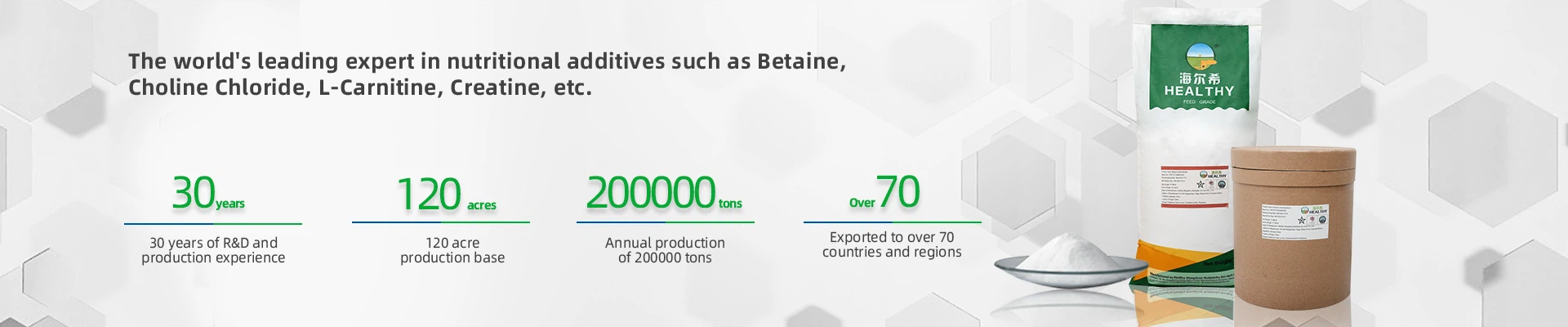
Having achieved a global reach, Healthy has established itself as a key player in over 70 countries.
Betaine supplements come in one of two form. Anhydrous or hydrochloride (hcl).
Betaine anhydrous
This form of betaine commonly is referred to as TMG (trimethylglycine). Broken down further the anhydrous refers to “without” water. Betaine anhydrous is the more common form used in research studies where positive benefits have been demonstrated.
It can be found as a standalone supplement both in capsule or powder form, or part of a comprehensive pre-workout.
Betaine hcl
Betaine HCL simply takes betaine and bonds it to the acid hydrochloride. The thought here is the HCL stimulates the production of stomach acid which in turn improves the absorption of the betaine.
Which is better?
Always choose betaine anhydrous. It's the more studied form and won't cause heartburn like betaine hcl commonly does.
What is Betaine Anhydrous used for?
Sports Nutrition
Betaine Anhydrous is commonly used in sports nutrition supplements due to its ability to increase power, strength, and endurance. It works by helping to increase the body's production of creatine, which is an essential component of muscle growth and repair. Additionally, Betaine Anhydrous may help to reduce fatigue and improve recovery time after intense exercise.
01
Sports Nutrition
Betaine Anhydrous is also used in a variety of health supplements. It has been shown to have a positive impact on heart health by reducing levels of homocysteine, a compound that has been linked to an increased risk of heart disease. Additionally, Betaine Anhydrous may help to improve digestion and nutrient absorption, as well as reduce inflammation in the body.
02
Liver Health
Betaine Anhydrous has been shown to have a positive effect on liver health. It works by helping to reduce fatty deposits in the liver and improve the liver's ability to process toxins. This makes it a valuable ingredient in supplements designed to support liver function and overall health.
03
Feed production
In addition to its primary uses, Betaine Anhydrous is also used in a variety of other products and industries. It is used as a feed additive in the agriculture industry to improve the growth and health of livestock.
04
Other Uses
Betaine Anhydrous is also used as a component in some industrial processes, such as the production of paper and textiles.
05

Betaine Anhydrous, also known as Trimethylglycine, has several potential benefits for animals. Here are five of the main benefits:
Improved growth performance: Studies have shown that adding Betaine Anhydrous to animal diets can lead to improved weight gain and feed conversion, particularly in pigs and poultry.
Increased nutrient digestibility: Betaine Anhydrous has been shown to improve the digestibility of nutrients such as amino acids and phosphorus in animal feed, which can lead to better overall nutrition.
Improved meat quality: Betaine Anhydrous has been shown to improve the quality of meat in poultry and pigs, including increased tenderness and juiciness.
Reduced stress: Betaine Anhydrous has been shown to have anti-stress properties in animals, particularly during periods of heat stress. This can lead to improved animal welfare and productivity.
Enhanced immunity: Betaine Anhydrous has been shown to have immune-enhancing properties in animals, including increased production of antibodies and improved disease resistance.
The recommended dosage of betaine anhydrous varies depending on its intended use. For general health and well-being, doses as low as 500 to 1000 milligrams per day may be sufficient.
In the context of exercise performance and benefits, a typical range is 2.5 to 5 grams per day, taken in divided doses. These dosages may enhance strength, endurance, and recovery.
In pre-workouts such as Wrecked and Pump Serum, you'll find 3000mg per serving.
So, lower doses are typically suitable for general health support, while higher doses are often used by athletes and individuals looking to enhance exercise performance.
Safety
Betaine anhydrous is generally considered safe when used as a supplement, especially at recommended doses. Numerous studies and clinical trials have evaluated its safety profile, and adverse effects are typically minimal and rare.
However, individual responses may vary, and it's crucial to consult with a healthcare professional, particularly if you have underlying medical conditions or are taking medications.
Additionally, monitoring for adverse effects is essential, and discontinuing use if any unusual symptoms occur is recommended.
Conclusion
Betaine anhydrous is a promising dietary supplement with potential benefits for individuals seeking improved physical performance, cardiovascular health, and overall well-being.
Its ability to enhance exercise performance, support muscle growth and recovery, aid in liver function, and contribute to cellular hydration makes it an appealing option for many individuals, from athletes striving for peak performance to those focused on long-term health.
Betaine anhydrous is generally considered safe when used responsibly. However, if you have any medical condition, we advise you to check with your healthcare professional before taking it.
As with any supplement, informed and responsible use is paramount to reap its potential advantages while ensuring your well-being. In the ever-evolving landscape of health and wellness, betaine anhydrous remains a promising compound deserving of further exploration and research.
How to Use Betaine Anhydrous Powder in Different Industries?
What Is The Best Source Of Betaine Anhydrous Powder?
Betaine anhydrous is a naturally occurring compound in various plant and animal sources. Betaine anhydrous is frequently derived from sugar beets, a root vegetable cultivated for its high sugar concentration. Betaine anhydrous is present in the sugar beet plant's leaves and roots and can be obtained by boiling, filtering, and crystallizing.
Betaine anhydrous can also be derived from wheat bran, the tough outer layer of the wheat kernel. Betaine anhydrous can be extracted from wheat bran through hydrolysis and purification due to its high concentration in the plant. Spinach, quinoa, oats, and barley are additional plant sources of Betaine anhydrous.
Betaine anhydrous is present in animal sources like meat, poultry, and seafood, especially in organs with high concentrations, such as the liver, kidney, and heart. Betaine anhydrous occurs in milk and dairy products, albeit at lower levels.
While natural sources of Betaine anhydrous are preferred due to their higher purity and potency, synthetic Betaine anhydrous can also be produced in a laboratory through chemical synthesis. However, synthetic Betaine anhydrous may be less effective and less well-absorbed by the body than natural sources.
How To Manufacture Bulk Betaine Anhydrous Powder?
Betaine anhydrous powder can be manufactured in bulk through a multi-step process that involves extracting, purifying, and drying the compound.
Extraction: The first step in manufacturing betaine anhydrous powder is to extract the compound from natural sources such as sugar beets or wheat bran. It typically involves crushing, grinding, or processing the source material to release the Betaine anhydrous. The compound is then extracted using a solvent such as ethanol or methanol.
Purification: Once the Betaine anhydrous has been extracted, it is purified to remove impurities and other compounds. It typically involves a process of filtration, distillation, or chromatography, in which the Betaine anhydrous is separated from other compounds and purified to a high degree of purity.
Drying: After purification, Betaine anhydrous is dried to obtain a powder by eliminating residual moisture. Multiple techniques can be used to achieve this, including spray drying, freeze drying, and vacuum drying. The powder is packaged and distributed for dietary supplements or other applications.
What Is The Difference Between Beta-Alanine And Betaine Anhydrous?
Beta-alanine and Betaine anhydrous are two popular dietary supplements often used by athletes and fitness enthusiasts to improve performance and promote muscle growth. While both supplements are similar in some ways, there are some critical differences between them.
Beta-alanine is an endogenous non-essential amino acid and can be acquired exogenously from dietary sources like meat and fish. Beta-alanine is the precursor to carnosine, a dipeptide predominantly in muscle tissue. Buffering acids is crucial during strenuous exercise.
On the other hand, Betaine anhydrous is a naturally occurring compound found in various plant and animal sources such as sugar beets, wheat bran, and spinach. Betaine anhydrous is sometimes referred to as trimethylglycine and is a methyl donor, meaning it can donate a methyl group to other molecules in the body.
One of the critical differences between beta-alanine and Betaine anhydrous is their mode of action. Beta-alanine works by increasing carnosine levels in muscle tissue, which helps to buffer the acids that can build up during intense exercise and delay the onset of fatigue. On the other hand, Betaine anhydrous works by donating methyl groups to other molecules in the body, which can help reduce homocysteine levels and promote healthy liver function.
Another difference between the two supplements is their timing and dosing. Beta-alanine is typically taken in doses of 2-5 grams per day, while Betaine anhydrous is usually taken in doses of 1.25-2.5 grams daily. Beta-alanine is also often taken as a pre-workout supplement, while Betaine anhydrous may be taken at any time.
What Industries Can Apply Betaine Anhydrous TMG Powder?
Betaine anhydrous is a multifaceted ingredient with diverse applications across various industries.
Food and beverage: Betaine anhydrous is commonly used as a food additive in baked goods, dairy products, and drinks. It can help to improve texture, enhance flavor, and act as a natural preservative.
Personal care and cosmetics: Betaine anhydrous is present in personal care and cosmetic products such as moisturizers, cleansers, and shampoos. Hydration of the skin and hair, texture improvement, and natural anti-inflammatory properties can be attributed to its use.
Animal feed: Betaine anhydrous is commonly added to animal feed to improve the health and performance of livestock. It can help to improve digestion, enhance growth rates, and boost immunity.
Pharmaceutical: Betaine anhydrous exhibits potential health benefits such as ameliorating liver function, mitigating inflammation, and decreasing homocysteine concentrations. Therefore, it has potential applications in the development of pharmaceuticals.
Industrial applications: Betaine anhydrous can also be used in various industrial applications, including as a solvent, a fuel additive, and a component in detergents and cleaning products.
Is Betaine Anhydrous TMG FDA-Approval?
Betaine anhydrous is considered a Generally Recognized As Safe (GRAS) ingredient by the United States Food and Drug Administration (FDA). It means it is considered safe for consumption when used by good manufacturing practices and in amounts commonly found in food.
While Betaine anhydrous is not FDA-approved explicitly for any particular use, it is widely used in various products, including foods, dietary supplements, and personal care products. The FDA regulates the use of Betaine anhydrous as a food ingredient and requires that it meets certain purity and quality standards.
Betaine anhydrous powder is a versatile ingredient with various other components to create different formulations and products. Here are some elements that can be used with Betaine anhydrous powder:
Aloe vera
Aloe vera and Betaine anhydrous are combined to produce a formula that is both hydrating and soothing. Aloe vera is a commonly used ingredient in skincare products due to its anti-inflammatory and redness-reducing properties.
Hyaluronic acid
Hyaluronic acid powder is an endogenous ingredient that can retain water up to 1000 times its weight. Betaine anhydrous can enhance skin hydration and reduce the appearance of wrinkles and fine lines.
Vitamin C (Ascorbic Acid Powder)
Vitamin C, as an antioxidant, can enhance skin brightness, diminish hyperpigmentation, and refine skin texture. Betaine anhydrous can aid in shielding the skin from environmental stressors and promoting a youthful appearance when combined.
Glycerin
Glycerin, a natural humectant, can prevent skin dryness and flakiness by attracting moisture. Betaine anhydrous can aid in maintaining skin hydration and enhancing skin texture.
Niacinamide
Niacinamide powder, a variant of vitamin B3, possesses anti-inflammatory properties, enhances skin texture, and regulates sebum secretion. Betaine anhydrous can aid skin balance and pore reduction when combined.

Our Factory
HEALTHY was founded in 1996. Headquartered in Xiaoshan District, Hangzhou City, Zhejiang Province, the company has a modernized garden-style production base with fully enclosed, automated and continuous production. The company has nearly 300 employees, of which more than 40% are college degree or above, and has a nationally recognized organic synthesis technology research and development team. The company has established Hangzhou High-tech R&D Center and Hangzhou Enterprise Expert Workstation, and become the cooperation base of Tongji University, Zhejiang University, Jiangnan University and other famous high-level universities.


FAQ
We're professional betaine anhydrous manufacturers and suppliers in China, specialized in providing high quality customization service for vendors and business partners. We warmly welcome you to wholesale high-grade betaine anhydrous from our factory.
Agricultural Grade Betaine Anhydrous, Food Grade Betaine Anhydrous, Fermentation Grade Betaine Anhydrous