

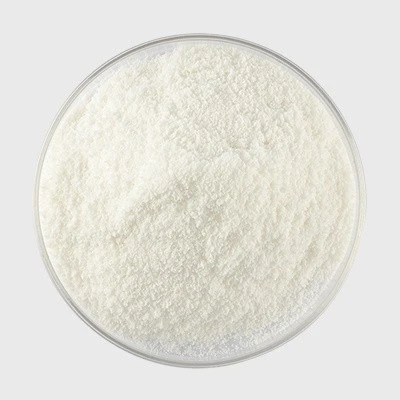
Choline chloride is a versatile and important organic compound that has found wide - ranging applications in various industries, from food to agriculture. As a reliable choline chloride supplier, I am delighted to share with you the fascinating chemical reactions that choline chloride can participate in.
Esterification Reactions
One of the most common types of reactions that choline chloride can be involved in is esterification. Choline chloride contains a hydroxyl group (-OH), which can react with carboxylic acids or their derivatives to form esters. The general reaction equation for the esterification of choline chloride with a carboxylic acid (R - COOH) can be written as:
[
\begin{align*}
(CH_3)_3N^+CH_2CH_2OHCl^-+R - COOH&\rightleftharpoons(CH_3)_3N^+CH_2CH_2OOC - RCl^-+H_2O
\end{align*}
]
This reaction is usually catalyzed by an acid, such as sulfuric acid or p - toluenesulfonic acid. The formed esters have unique physical and chemical properties. For example, they may have better solubility in certain organic solvents, which can be useful in the formulation of pharmaceuticals or cosmetics. In the food industry, esters of choline chloride can be used as flavoring agents or emulsifiers. The esters can impart specific flavors and improve the stability of food products. You can find more about the food - related applications of choline chloride in our Food Grade Choline Chloride page.
Quaternization Reactions
Choline chloride itself is a quaternary ammonium salt. However, it can also participate in further quaternization reactions. For instance, it can react with alkyl halides (R - X, where X is a halogen such as chlorine, bromine, or iodine) to form more complex quaternary ammonium compounds. The reaction mechanism is as follows:
[
\begin{align*}
(CH_3)_3N^+CH_2CH_2OHCl^-+R - X&\rightarrow(CH_3)_3N^+CH_2CH_2ORX^-+HCl
\end{align*}
]
These newly formed quaternary ammonium compounds have enhanced surface - active properties. They can be used as surfactants in detergents, fabric softeners, and industrial cleaning agents. In the agricultural field, quaternized choline chloride derivatives can be used as pesticides or plant growth regulators. They can interact with the cell membranes of pests or plants, affecting their physiological functions. To learn more about the agricultural applications of choline chloride, visit our Agricultural Grade Choline Chloride page.
Complexation Reactions
Choline chloride can form complexes with various metal ions. For example, it can react with transition metal ions such as copper(II), zinc(II), and iron(III). The lone pairs of electrons on the nitrogen atom in the quaternary ammonium group and the oxygen atom in the hydroxyl group can coordinate with the metal ions. The general form of the complexation reaction can be represented as:
[
\begin{align*}
n(CH_3)_3N^+CH_2CH_2OHCl^-+M^{m +}&\rightarrow[(CH_3)_3N^+CH_2CH_2OH]nM^{m+}Cl{mn}^-
\end{align*}
]

where (M^{m +}) is the metal ion with a charge of (m+) and (n) is the coordination number. These metal - choline chloride complexes have potential applications in catalysis. They can act as catalysts in organic synthesis reactions, such as oxidation, reduction, and coupling reactions. In addition, in the field of medicine, some metal - choline chloride complexes may have antibacterial or anticancer properties.
Hydrolysis Reactions
Under certain conditions, choline chloride can undergo hydrolysis reactions. In an alkaline environment, the chloride ion can be replaced by a hydroxide ion, and the hydroxyl group on the choline moiety may also be involved in further reactions. The hydrolysis reaction can be written as:
[
\begin{align*}
(CH_3)_3N^+CH_2CH_2OHCl^-+OH^-&\rightarrow(CH_3)_3N^+CH_2CH_2OH(OH)^-+Cl^-
\end{align*}
]
The hydrolysis products may have different biological activities compared to choline chloride itself. In biological systems, hydrolysis of choline chloride may be catalyzed by enzymes. For example, in the human body, choline is an important nutrient, and the hydrolysis of choline - containing compounds is involved in various metabolic processes. Choline is essential for the synthesis of acetylcholine, a neurotransmitter, and for the formation of cell membranes. In infant formula milk powder, choline is an important additive. You can find detailed information about Choline in Infant Formula Milk Powder on our website.
Redox Reactions
Although choline chloride is not a typical redox - active compound, under certain strong oxidizing or reducing conditions, it can participate in redox reactions. For example, in the presence of a strong oxidizing agent such as potassium permanganate ((KMnO_4)) in an acidic medium, the carbon - hydrogen bonds in the choline molecule may be oxidized. The oxidation products may include aldehydes, ketones, or carboxylic acids.
[
\begin{align*}
(CH_3)_3N^+CH_2CH_2OHCl^-+[O]&\rightarrow(CH_3)_3N^+CH_2CHOCl^-+H_2O
\end{align*}
]
These redox reactions can be used in the synthesis of more complex organic compounds. On the other hand, in some reducing environments, the quaternary ammonium group may be reduced, although such reactions are relatively rare and usually require specific reducing agents and reaction conditions.
Applications Based on Chemical Reactions
The chemical reactions of choline chloride are the basis for its wide - ranging applications. In the food industry, as mentioned earlier, the esterification and complexation reactions can be used to develop new food ingredients. In agriculture, the quaternization and complexation reactions can lead to the development of effective pesticides and fertilizers. In the pharmaceutical industry, the various chemical reactions can be utilized to synthesize new drugs or drug delivery systems.
Contact Us for Procurement
If you are interested in choline chloride for your specific applications, whether it is for food, agriculture, or other industries, we are here to assist you. Our high - quality choline chloride products are produced with strict quality control measures to ensure their purity and effectiveness. We are committed to providing excellent customer service and technical support. Contact us to start a procurement negotiation and explore how our choline chloride can meet your needs.
References
- Smith, J. K. (2018). Organic Chemistry: Reactions and Mechanisms. Wiley.
- Jones, A. B. (2019). Agricultural Chemicals: Chemistry and Applications. Springer.
- Brown, C. D. (2020). Food Chemistry: Principles and Applications. Elsevier.